Pull up three different real estate sites and search "Monroe WA housing market," and you will get three different stories. One says prices are flat. Another says they are up nearly ten percent. A third calls it a balanced market. None of them are lying. They are just each looking at a different slice of a city that behaves like two cities wearing one name tag.
As of August 2026, Movoto's snapshot of Monroe lists a median listing price of $802,000, a per-square-foot value of $340, and a median of 65 days on market, essentially unchanged from a year earlier. Redfin's tally of closed sales for the twelve months ending December 2025, the most recent full breakdown available from that source, put the average sold price at $767,000, up 9.2 percent year over year, with homes drawing an average of three offers per listing. A separate MLS-sourced snapshot dated August 1, 2026 shows 99 homes for sale in Monroe, a median closed price over the trailing six months of $799,999, and 3.32 months of supply, which most agents would call a fairly balanced market.
Flat. Up almost 10 percent. Balanced. All describing the same city, the same summer, the same roughly 20,000 residents.
That is not a data error. It is a symptom.
Two products, one city limit
Monroe's housing stock splits into two groups that do not compete with each other, do not sell to the same buyer, and do not move at the same speed. Averaging them together produces a number that describes neither one accurately.
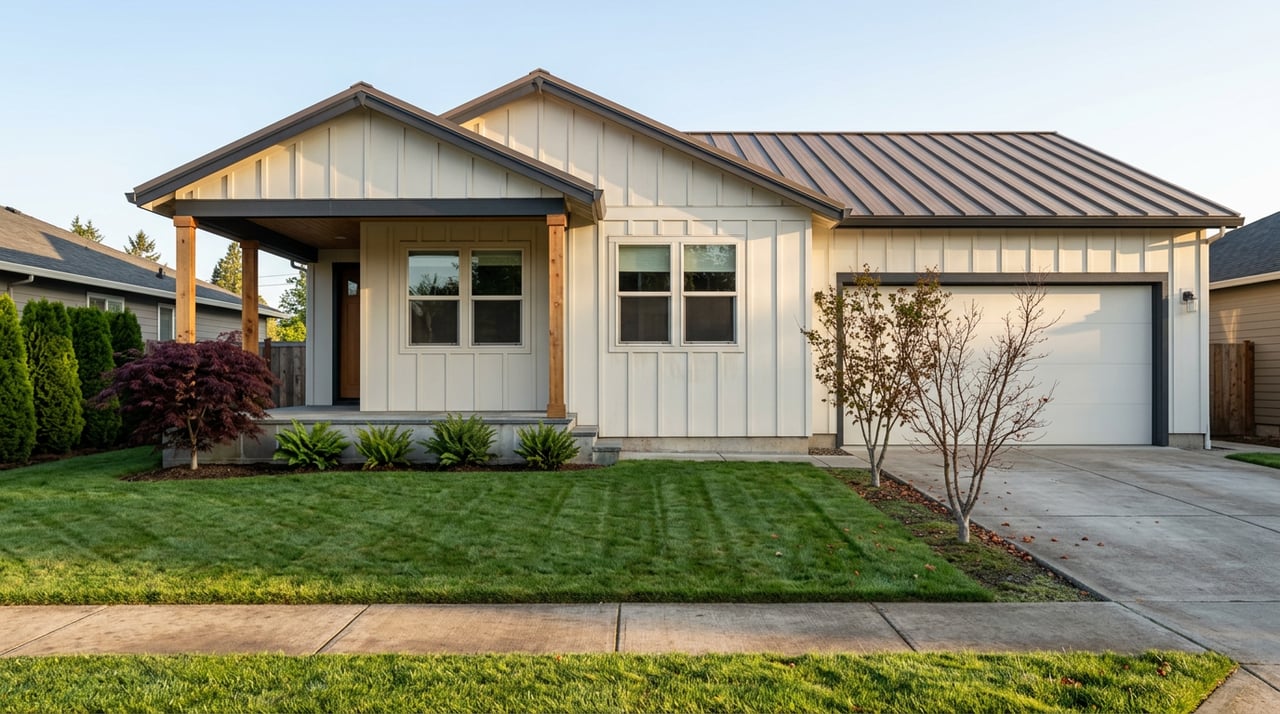
The first group is in-town Monroe: the historic downtown core, the older neighborhoods that surround it, and the newer two-story developments built on the north hill above US-2. These homes sell to a broad pool of commuter families who care about school proximity, drive time to the US-2 and SR-522 corridors, and the age and finish level of the house itself. This is the stock that goes head to head with Lake Stevens and Snohomish for the same buyer, and it moves at roughly the pace you would expect from a competitive suburban market when it is priced correctly.
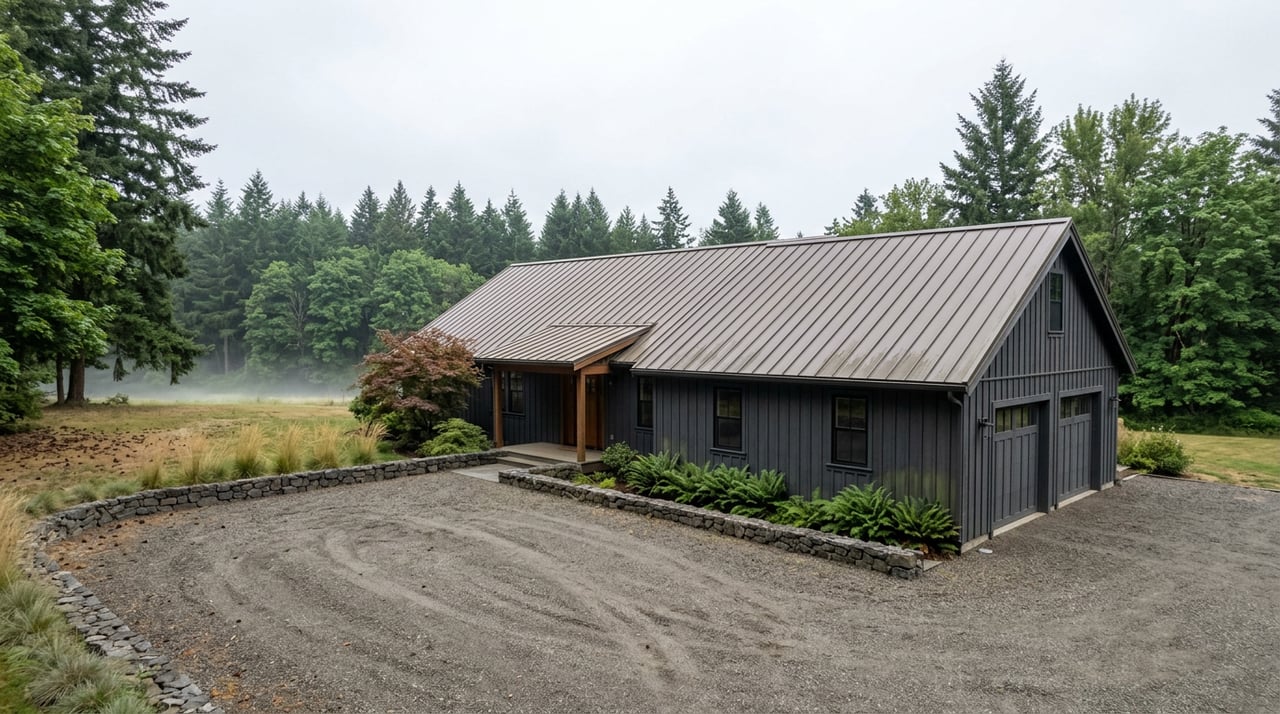
The second group sits outside town, on the small-acreage and equestrian belt that spreads south into the Tualco Valley farmland and north toward the plateau parcels near Lake Roesiger. These properties do not price against a standard in-town comp set. They price on land quality, water rights, septic capacity, and outbuildings, the kind of details a bedroom-and-bathroom comparison completely misses. The buyer pool here is thinner and more specific. Someone who wants three fenced acres for horses is not cross-shopping a 1,900 square foot colonial on the north hill, and vice versa. Because the pool is narrower, these homes take longer to find their match. When they do, they often sell at a real premium relative to a simple price-per-square-foot comparison, because the buyer isn't just paying for square footage. They're paying for the acreage, the setup, and the fact that almost nothing like it exists closer to the metro core.
Here is the comparison in plain terms:
| In-town Monroe (historic core through the north hill) | Acreage and equestrian belt (Tualco Valley, Lake Roesiger area) | |
|---|---|---|
| What sets the price | School proximity, commute access to US-2 and SR-522, home age and condition | Land quality, water rights, septic capacity, outbuildings |
| Who's buying | Commuter families, broad demand | Hobby farmers and equestrian buyers, narrower pool |
| How fast it typically moves | Comparable to Snohomish or Lake Stevens when priced right | Slower to match, but the wait usually isn't a warning sign |
| The payoff | Predictable comps, steady demand | Real premiums once the right buyer shows up |
Blend those two markets into one citywide average and you get exactly the kind of contradictory headline numbers that started this conversation. A month with more acreage closings than usual will drag the average days-on-market number up and make the whole city look sluggish. A month dominated by fast in-town sales will make it look hot. Neither tells you what your specific corner of Monroe is actually doing.
What this means if you're selling
If your home sits in-town, near the historic core or on the north hill, a 65-day citywide average is not your benchmark. Your competition is other in-town Monroe listings and the equivalent stock in Snohomish and Lake Stevens. If your home has been sitting well past what comparable in-town properties are taking, that's a pricing or presentation conversation worth having, not something to shrug off as "just how Monroe is right now."
If you're selling acreage in the Tualco Valley or up toward Lake Roesiger, a longer time on market by itself is not a red flag. It's the ordinary cost of selling into a smaller, more specialized buyer pool. What matters more is whether your marketing is actually reaching that pool. A listing that looks like every other suburban house online, without calling out the water rights, the outbuildings, or the acreage itself, is fishing in the wrong pond even if the price is right.
What this means if you're buying
If you're comparing Monroe to Snohomish or Lake Stevens using a single citywide days-on-market number, you're comparing an average of two different products to a more uniform one. Ask which segment of Monroe a specific listing sits in before you draw conclusions from how long it's been active. A north-hill family home that's been on the market for 40 days is a different situation than a five-acre equestrian property that's been on the market for 90.
One detail worth knowing if you're shopping the rural fringe: the Monroe School District boundary extends well beyond the city limits, reaching out into the surrounding Sky Valley. That means a property well outside town, on acreage that has nothing in common with a subdivision, can still feed into Monroe schools. If school assignment matters to your search, don't rule out a property just because it's not technically "in" Monroe. Confirm the specific address against the district boundary rather than assuming based on the mailing address alone.
A few questions worth asking before you act on a citywide number
My in-town home has been listed for six weeks. Should I be worried? Compare it against other in-town Monroe listings and recent north-hill sales specifically, not the citywide average. If similar homes near you are going pending faster, that points to a pricing or condition issue worth addressing now rather than waiting it out.
I want acreage, but I'm worried about resale down the road. A longer time on market for acreage and equestrian properties is typical, not a sign of a weak segment. The tradeoff is a smaller buyer pool now in exchange for a property that holds real, specific value to the right future buyer.
Does buying outside the city limits mean my kids won't attend Monroe schools? Not necessarily. The Monroe School District boundary reaches beyond the city itself into the surrounding Sky Valley area. Verify the specific parcel against the district boundary rather than assuming based on distance from downtown.
Monroe's housing market makes a lot more sense once you stop asking "what is Monroe doing" and start asking "what is this part of Monroe doing." If you're trying to figure out which side of that split your next move falls on, whether you're pricing a sale near the historic core or sizing up acreage out toward Tualco Valley, Jennifer Schultz has spent years reading these submarkets block by block and parcel by parcel. Let's Connect and walk through what the numbers actually mean for your specific address.